
Branding and positioning are not the same. Learn how they work together—and why understanding the difference is essential to building a standout brand.
Introduction
Branding and positioning: same thing, right? Not quite.
Many founders and marketers use these terms interchangeably—but they play very different roles in building a standout brand.
When you confuse one for the other, it leads to vague messaging, inconsistent design, and missed opportunities.
At Rembrand, we guide our clients through both branding and positioning—because both are essential if you want a brand that leads rather than follows.
This post will break down the difference between positioning and branding, how they intersect, and why you need both.
By the end, you’ll know which is which—and how to use them to create a clearer, stronger, more competitive brand.
What Is Brand Positioning?
Brand positioning is the strategic place you occupy in the minds of your ideal audience. It’s about who you serve, what makes you different, and why they should choose you over competitors.
It defines:
- Your target market
- Your category or niche
- Your unique value proposition (UVP)
- How you compare to alternatives
Positioning gives direction to everything that follows: your messaging, marketing, content, and even product development.
🧠 Takeaway: Positioning answers the question: “Why you?” in a crowded market.
What Is Branding?
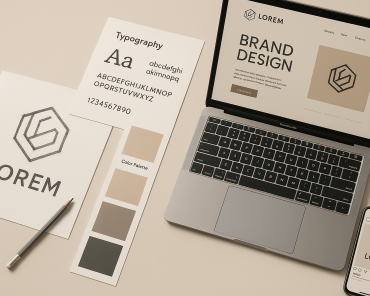
Branding is how your company expresses itself to the world. It includes both your visual and verbal identity—the tangible and emotional signals that communicate your brand.
Branding includes:
- Visual identity: Logo, color palette, typography, design system
- Verbal identity: Voice, tone, key messaging
- Brand personality: The emotional vibe you project
Branding brings your positioning to life. It’s how your audience experiences what makes you different.
🧠 Takeaway: Branding is the expression of your positioning. It’s how people feel about what you stand for.
Positioning vs. Branding: The Key Differences
Let’s make the distinction clearer:
| Aspect | Positioning | Branding |
|---|---|---|
| Purpose | Strategic clarity | Emotional connection |
| Focus | Market & audience perception | Audience experience |
| Elements | Category, UVP, audience, differentiation | Visuals, messaging, tone, design |
| Outcome | Competitive advantage | Recognition, trust, loyalty |
Still confused? Here’s a metaphor:
- Positioning is the message.
- Branding is the megaphone.
🧠 Takeaway: Positioning is your brand’s strategy. Branding is how you bring that strategy to life.
How They Work Together
Positioning and branding are different, but deeply connected. Here’s how they intersect:
- Positioning informs branding: You define who you are and why you matter, then express it visually and verbally.
- Branding reflects positioning: If done right, every brand asset reinforces your unique place in the market.
- Misalignment is costly: Great design with weak positioning = noise, not signal.
When they’re aligned:
- Messaging becomes sharper
- Visuals feel intentional
- Teams stay on-brand
- Marketing becomes more efficient and effective
🧠 Takeaway: Branding without positioning is empty. Positioning without branding is invisible.
Conclusion
Positioning and branding aren’t the same—but you need both.
Your positioning defines what makes you different and valuable. Your branding expresses that difference in a way that resonates.
If you want a brand that connects, converts, and endures, you need a clear strategy and an identity to match.
Start by asking:
- Do we have a clear position in the market?
- Does our brand identity support and reflect that position?
If the answer is “not really” to either—it’s time to revisit both.
Because your brand isn’t just how you look. It’s how you’re positioned to win.