
Introduction
People don’t remember taglines. They remember how your brand made them feel.
That gut-level instinct—whether they trust you, like you, or want to avoid you—is what your brand really is. Not your logo. Not your color palette. Not even your elevator pitch.
It’s a feeling.
But that feeling isn’t just luck or intuition. It’s the result of strategic choices—what you say, how you show up, and how consistently you do it.
In this article, we’ll unpack what a “gut feeling” brand really means, why it matters more than you think, and how to design that feeling with intent from day one.
1. The Truth About Brand Perception
Let’s start with a bit of honesty: your brand is not what you say it is—it’s what they feel it is.
That quote, adapted from branding expert Marty Neumeier, cuts through decades of misperceptions. Too many early-stage companies obsess over how their brand looks and forget how it feels.
Think about it: Airbnb’s brand isn’t just about belonging—it feels welcoming, personal, and easy. Liquid Death sells canned water, but its brand feels rebellious, irreverent, and unforgettable. Even a B2B tool like Notion doesn’t just organize notes—it feels elegant, flexible, and creative.
All of this? It’s intentional.
Perception is shaped by every interaction—your messaging, your design, your tone of voice, your customer service replies, even the load time of your website.
If you’re not shaping that perception with purpose, it’s being shaped without you.
2. What Creates a “Gut Feeling”?
Gut feelings aren’t formed in a vacuum. They’re built through micro-moments—tiny, repeated signals that add up to a clear emotional takeaway.
Here’s what contributes to that feeling:
- Consistency across touchpoints: If your website is playful but your sales email is corporate, the inconsistency breeds distrust.
- Clarity of purpose: People can feel when a brand knows what it stands for—and when it doesn’t.
- Psychological cues: Humans are wired to pick up on patterns, tones, visual hierarchies, and emotional mirroring.
- Brand behavior: How you respond to comments. How fast you fix an issue. These things feel more meaningful than a mission statement.
For example, if your homepage says “We’re here to simplify your business,” but your onboarding is filled with complexity—you’ve broken the feeling. You’ve introduced friction where ease was promised.
Trust begins with alignment—and alignment creates emotional clarity.
3. Designing for Emotion, Not Just Recognition
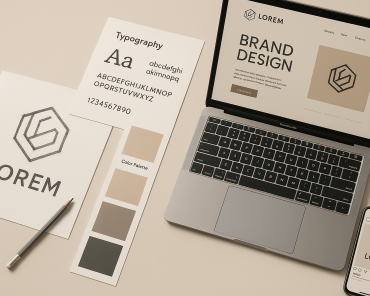
Visual identity is not just about looking professional. It’s about evoking the right feeling.
When you design a brand, you’re designing a mood.
Think about it this way:
- Calm and trustworthy? Use softer hues, generous white space, and clean typefaces.
- Energetic and disruptive? Sharp contrast, bold typography, dynamic visuals.
- Premium and precise? Grid-based layouts, minimal color use, refined animations.
But it’s not just visuals—it’s storytelling, too. The copy on your hero section. The metaphors you choose. The analogies you use in a pitch deck.
A good logo is forgettable on its own. A feeling—that sense that “this company just gets me”—is what lingers.
So design with emotion in mind. Ask: What should people feel when they land on our site, see our logo, or hear our pitch?
Then build the experience around that.
4. Tools to Keep Your Brand Feeling Consistent
It’s not enough to spark the right feeling once—you have to keep it consistent.
Here’s how:
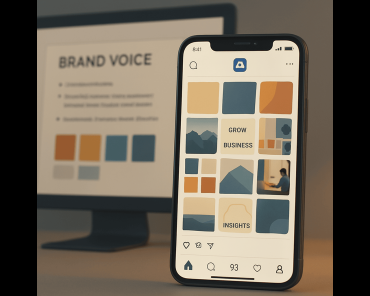
→ Brand Voice Guide
Define emotional tone, not just words. Don’t stop at “we’re approachable”—show how that looks in action. Use examples. Define what’s not on-brand too.
→ Design Systems
Document everything from button styles to photo treatments. Emotional consistency comes from visual discipline.
→ Internal Gut-Check Frameworks
Train your team to ask:
- “Does this sound like us?”
- “Would our customer feel seen by this?”
- “Is this the same feeling we’ve been building?”
→ User Feedback Loops
Gut feelings are human. You won’t always get it right. Build in regular moments to listen, refine, and realign.
Because when your brand starts to feel scattered, it doesn’t matter how sharp your logo is. Consistency is trust.
Conclusion: Make People Feel Something
Your brand already exists—in your audience’s gut. The question is: are you shaping that feeling with intention? Or are you letting it evolve by accident?
Great brands aren’t built on flashy graphics or clever copy alone. They’re built on emotional clarity—on understanding how you want people to feel and designing every experience to support that feeling.
So start there. Define the emotional goal. Then build your brand around it. Because in a world full of noise, the brands that make us feel something… are the ones we remember.
Want to make sure your brand feels right to the people who matter?
Book a Brand Clarity Session with Rembrand and let’s shape a brand that connects—on purpose.